Sound, Code, and the Frontier of Human Augmentation
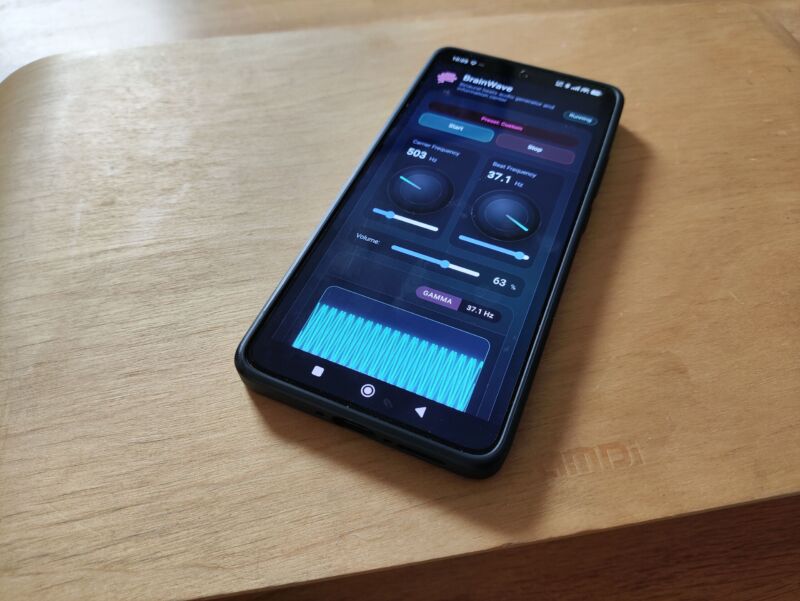
In a technological landscape increasingly dominated by rapid advances in artificial intelligence it is easy to forget that some of the most profound frontiers of exploration remain deeply human. As a self-hostable web application focusing on experimentation with binaural beats, BrainWave aims to directly connect these two domains. This project sees sound interface with code, computation meet up with introspection, and technology being used not to replace human capacities, but instead to augment and explore them.
What Are Binaural Beats?
When two slightly different frequencies are presented separately to each ear—typically via headphones—the brain does not perceive them as two distinct tones. Instead, it registers a third, phantom frequency equal to the difference between the two. This perceived beat is not present in the sound itself, but emerges through neural processing. This is the infamous binaural beat, and it lies at the heart of BrainWave.
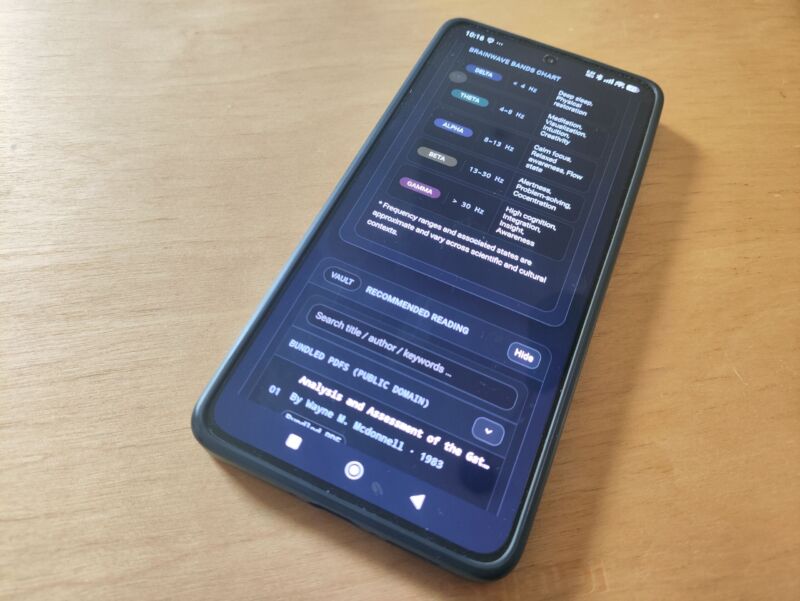
For decades, researchers, artists, meditators, and technologists have explored how these frequencies correspond to different brainwave bands often associated with deep meditative states, relaxation, focus, creativity and more: delta, theta, alpha, beta, and gamma. While binaural beats are not a magic switch for consciousness, they can function as a gentle scaffold: a sonic environment that supports attention, reflection, and the creation of altered mental states on demand.
A Long-Standing Creative Thread
BrainWave did not emerge in isolation. It is the latest iteration in a much longer trajectory of work by Jacques Laroche, whose creative practice has consistently moved across the boundaries of audio experimentation, coding, hardware tinkering, and critical technology studies.
Human Augmentation Beyond the Machine
Much contemporary discourse around “augmentation” focuses outward: smarter assistants, faster models, larger datasets. AI systems increasingly extend human capabilities in writing, analysis, and image generation. These developments are powerful, and worth critical engagement, but they represent only one side of the story. The other side is human augmentation from within.
Practices such as meditation, breathwork, contemplative listening, and even biohacking explore how attention, perception, and self-regulation can be trained or supported through carefully designed environments. Technologies like binaural beats occupy an interesting middle ground: they are computational, yet also intimate, and they are engineered, yet at the same time they are experiential.
BrainWave, deliberately positioned here, asks some crucial questions. What happens if we design software not to extract productivity, but to cultivate awareness? And, what if technological progress included tools for stillness, introspection, and cognitive presence?